
Schools today are navigating increasing academic variability, behavioral complexity, and growing expectations around accountability and inclusion. In this context, many educators are asking the same question: What is MTSS, and how does it actually support students?
Understanding how the tiered system of supports works is the first step toward building a stronger, more sustainable tiered support system.
What is MTSS?
A Multi-Tiered System of Supports, or MTSS is not a program or curriculum. It is a schoolwide framework that helps schools organize academic and behavioral supports into a structured, data-driven system. When implemented effectively, MTSS strengthens general education instruction, clarifies intervention pathways, and supports more informed special education decisions.
MTSS organizes support into tiers, with increasing intensity as the student need increases. The goals are early identification, targeted intervention, and continuous progress monitoring.
Is MTSS Only for Students with Disabilities?
No. MTSS is a universal framework designed for all students.
While MTSS helps identify students who may require special education services, it is fundamentally a general education framework. It helps schools provide proactive support before concerns escalate to formal referrals. manage them, they participate more fully and reactive behavior often decreases.
The Key Elements That Make Up the MTSS Framework
An effective MTSS framework includes several essential components:
- A Tiered System of Supports
Students receive support at varying levels of intensity depending on need.
- Universal Screening
Schools use screening tools to identify students who may be at risk academically or behaviorally.
- Data Driven Decision Making
Teams regularly review student performance data to determine intervention effectiveness.
- Progress Monitoring
Ongoing data collection helps determine whether students are responding to interventions.
- Collaborative Problem Solving
Interdisciplinary teams meet consistently to adjust supports.
Together, these elements create a structured system that promotes prevention rather than reaction.
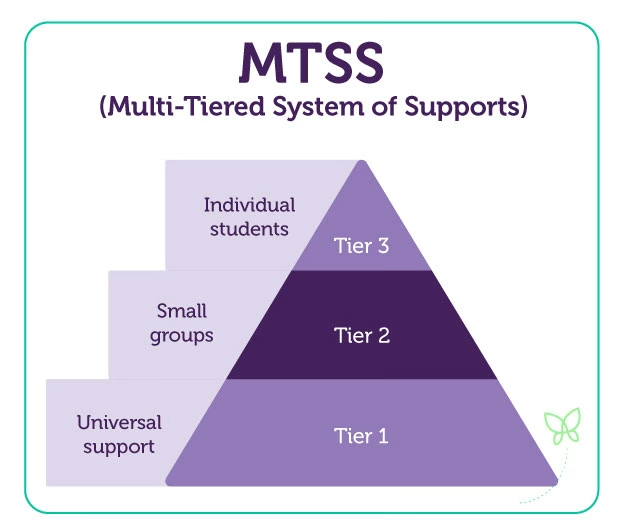
Understanding the Three Tiers
Tier 1: Universal Instruction and School wide Supports
Tier 1 represents high-quality core instruction provided to all students. It includes:
- Standards-aligned instruction
- Differentiated teaching strategies
- School wide behavioral expectations
- Classroom management systems
Effective Tier 1 instruction should meet the needs of approximately 80 percent of students, serving as a benchmark for evaluating the strength of core instructional practices rather than a rigid cutoff for student support.
Tier 1 is the foundation. When it is weak, higher tiers absorb preventable referrals and strain available resources.
Tier 2: Targeted Small Group Interventions
Tier 2 supports students who require more than universal instruction but do not need individualized intervention.
Examples include:
- Small group reading intervention
- Targeted math support
- Social skills groups
- Check-in/check-out behavioral systems.
Tier 2 interventions are time-limited, and progress is monitored closely. Students may move back to Tier 1 once benchmarks are met.
Tier 3: Intensive, Individualized Interventions
A Tier 3 provides individualized, high-intensity support. Examples include:
- One-on-one intervention
- Individualized behavior plans
- Functional behavior assessment-informed strategies
- Multidisciplinary collaboration
Tier 3 interventions are highly personalized. If students do not respond adequately, teams may consider evaluation for special education eligibility
What Is the Difference Between Tier 2 and Tier 3 Interventions?
Understanding the difference between Tier 2 and Tier 3 interventions is essential for clarity and sustainability.
Level of Individualization
- Tier 2 often uses standardized intervention protocols delivered in small groups.
- Tier 3 interventions are individualized based on detailed student data.
Intensity and Frequency
- Tier 2 typically involves moderate increases in time and frequency.
- Tier 3 involves significantly increased intensity and individualized planning.
Decision Rules
- Tier 2 placement is often based on screening thresholds.
- Tier 3 decisions involve deeper analysis and sometimes multidisciplinary evaluation.
Staffing
- Tier 2 may be delivered by interventionists or trained educators.
- Tier 3 frequently involves specialists such as school psychologists, special educators, or behavior analysts.
Clarity between these tiers prevents resource strain and ensures appropriate intervention planning.
MTSS vs RTI vs PBIS: What Is the Difference and How Do They Work Together?
Many educators use the terms MTSS, RTI, and PBIS interchangeably. While they are related, they are not identical.
What Is RTI?
Response to Intervention, or RTI, originated as a framework for identifying students with learning disabilities through early academic intervention and progress monitoring. RTI involves regular monitoring of student progress and targeted interventions with the intentions of delivering a personalized plan to meet students’ individual needs. RTI primarily focused on academic intervention, particularly reading and math.
What Is PBIS?
Positive Behavioral Interventions and Supports, or PBIS, is a framework focused on improving school climate and preventing behavioral challenges. PBIS emphasizes prevention, explicit behavioral instruction, and consistent reinforcement systems.
MTSS as the Integrating Framework
MTSS functions as the coordinating structure that aligns both academic and behavioral systems.
In many schools:
- RTI addresses academic intervention processes
- PBIS addresses behavioral systems
- MTSS integrates both within one unified, tiered model
Rather than operating separate initiatives, MTSS provides the structure that connects them. This alignment reduces initiative fatigue and increases consistency across classrooms and grade levels.
Does MTSS Differ from State to State?
While the foundational principles are consistent, implementation details can vary. For school leaders, reviewing state level guidance helps ensure alignment with local policies and compliance expectations.
Why Strong MTSS Systems Matter for Educational Outcomes
A strong Tier 1 system benefits all students. Clearly defined Tier 2 and Tier 3 structures ensure that students receive timely, appropriate, and person-centered support.
When implemented thoughtfully, MTSS can:
- Improve early identification of learning and behavioral challenges
- Reduce unnecessary referrals to special education
- Strengthen inclusion practices
- Improve consistency in data-based decision-making
- Support students with diverse learning needs
MTSS is not about labeling students. It is about ensuring that support is proportional to need and grounded in evidence.
What Does Effective MTSS Implementation Require?
While this article focuses on understanding MTSS, effective implementation requires:
- Leadership alignment
- High-quality instructional materials
- Clearly defined tier criteria
- Reliable data systems
- Adequate resource allocation
- Ongoing professional development
- Collaborative problem solving
Schools seeking deeper guidance on building sustainable systems can explore structured implementation of roadmaps designed specifically for educational leadership teams.
Building Sustainable Systems That Support Every Student
Understanding how MTSS is used to support educational outcomes is an important first step. But real impact happens when the framework moves from theory to consistent practice.
Strong systems do not emerge from a single training or initiative. They grow from shared leadership, clear expectations, reliable data systems, and ongoing professional learning. When these elements align, schools are better equipped to support students early, reduce unnecessary referrals, and strengthen inclusion across grade levels.
MTSS is not about adding another program. It is about organizing the supports you already have into a clearer, more intentional system. When done well, it creates predictability for staff and meaningful support for students.
Aspire’s School Partnership team works alongside districts to strengthen internal systems through structured consultation, professional development, and implementation planning. Our focus is not on adding new initiatives, but on helping teams stabilize and refine the systems already in place.
If you are exploring ways to strengthen your framework, connect with Aspire to learn more about professional development and school-based support options.
Frequently Asked Questions
No. MTSS is designed for all students. It provides early intervention and targeted support within general education and may inform decisions about special education eligibility when necessary.
Tier 2 provides targeted small group support for students at risk. Tier 3 provides intensive, individualized interventions for students with significant needs.
RTI focuses primarily on academic intervention. PBIS focuses on behavioral systems. MTSS integrates both academic and behavioral systems into one coordinated framework.
Schools often use universal screening tools, progress-monitoring systems, behavioral-tracking platforms, and data dashboards to support MTSS decision-making. Tool selection should align with district goals and staff capacity.